Overview #
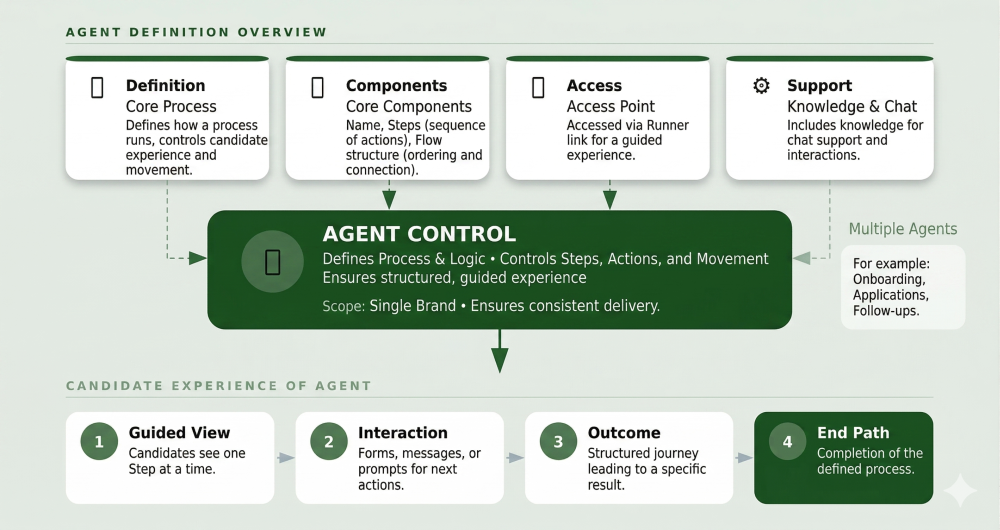
An Agent is the intelligent guide that orchestrates a Candidate's Journey. It is configured by your team and executes consistently for every Candidate on the same Path.
What Makes Up an Agent #
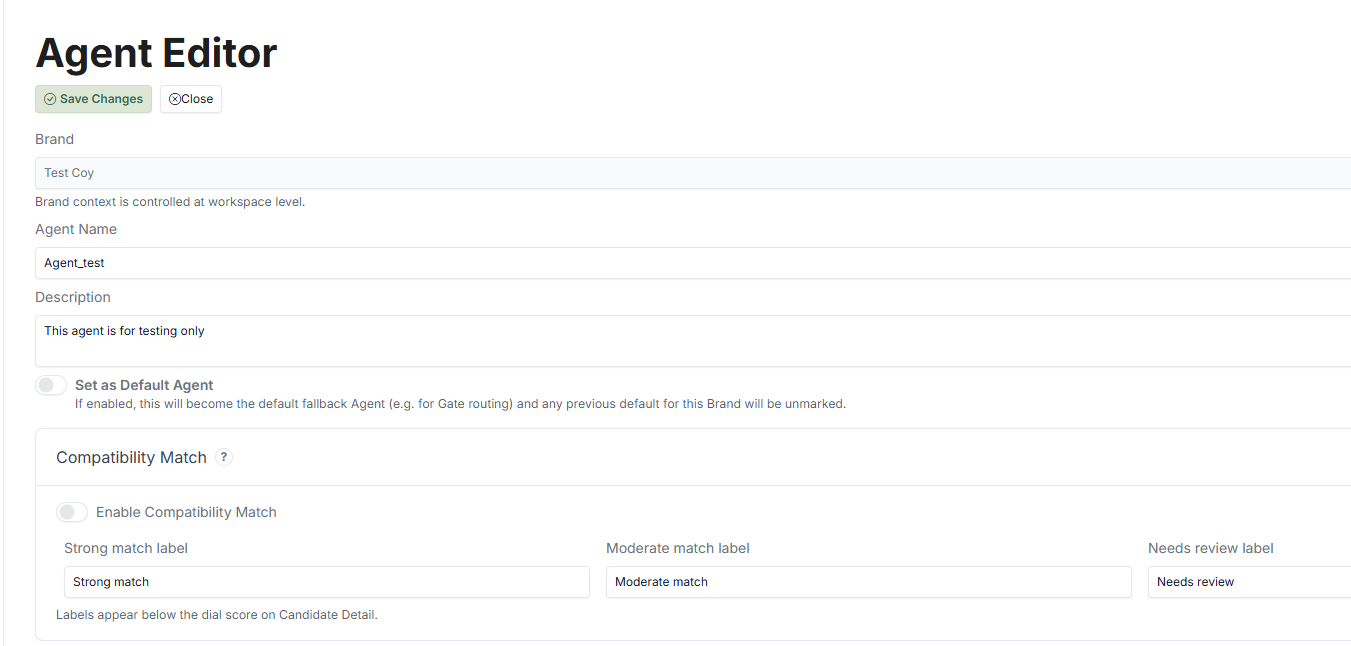
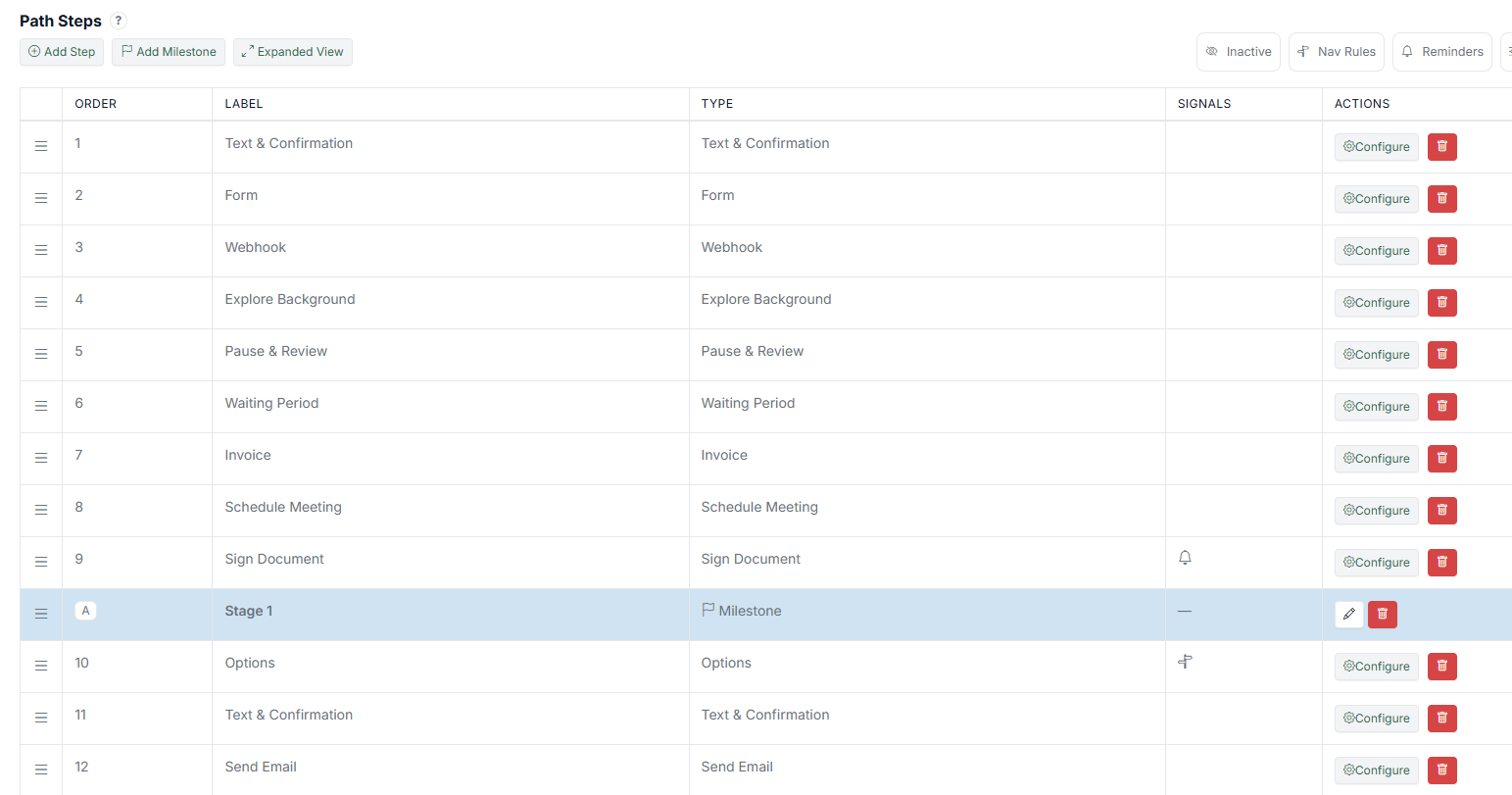
At a high level, an Agent includes:
- Name — Identifies the purpose of the Agent
- Steps — The sequence of actions or interactions (e.g., forms, messages, confirmations)
- Flow structure — How Steps are ordered and connected
- Access point (Runner) — The Agent is accessed through a Runner link, where the Candidate experiences the flow
- Knowledge & Chat — The Agent can include knowledge that supports the Candidate through chat interactions (see Agent Chat & Knowledge)
How the Candidate Experiences an Agent #
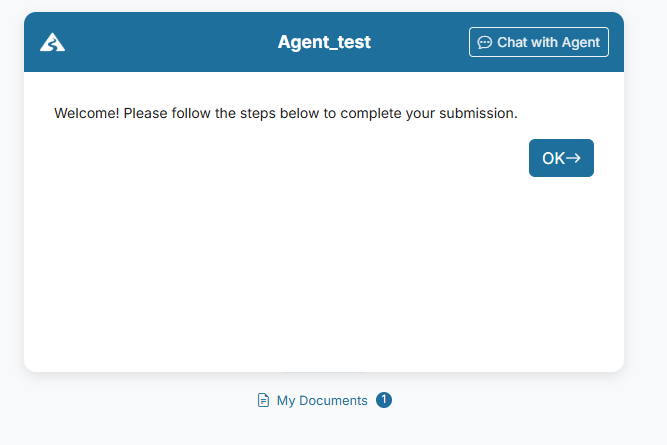 From the Candidate's perspective, the Agent appears as a guided experience. Through the Runner:
- They see one Step at a time
- They are guided on what to do next
- They interact through forms, messages, or prompts
The experience is structured and sequential.
Multiple Agents #
You can create multiple Agents for different processes. For example:
- One Agent for onboarding
- One Agent for applications
- One Agent for follow-ups
Each Agent can have its own Steps and logic.
Brand Ownership #
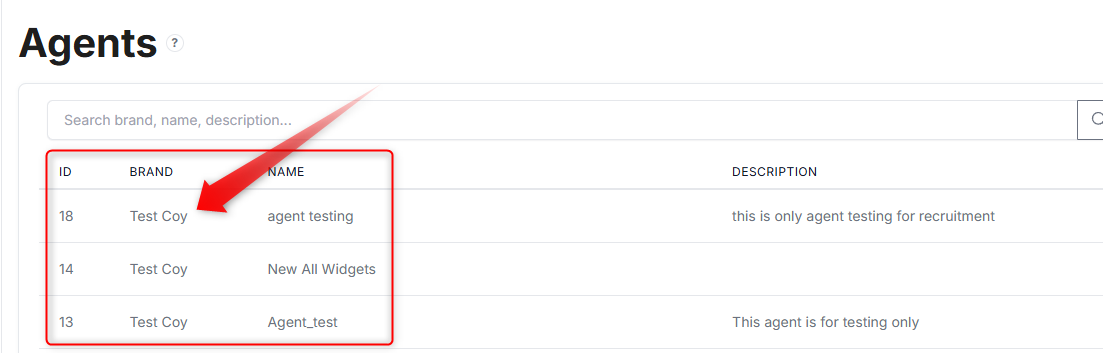 Every Agent belongs to a specific Brand.
- An Agent is created within a Brand
- It can only be used within that Brand
- Agents do not work across multiple Brands
For more on how Brands are structured, see Brand vs Account Structure.
Why This Matters #
- Defines how your process runs
- Ensures consistency across Candidates
- Reduces manual coordination
- Creates a structured, guided experience