Overview #
Most systems like CRMs are built to track and manage data. Zirpa takes a different approach: instead of managing records, Zirpa guides Candidates through a structured Journey from start to Outcome.
CRM vs Zirpa #
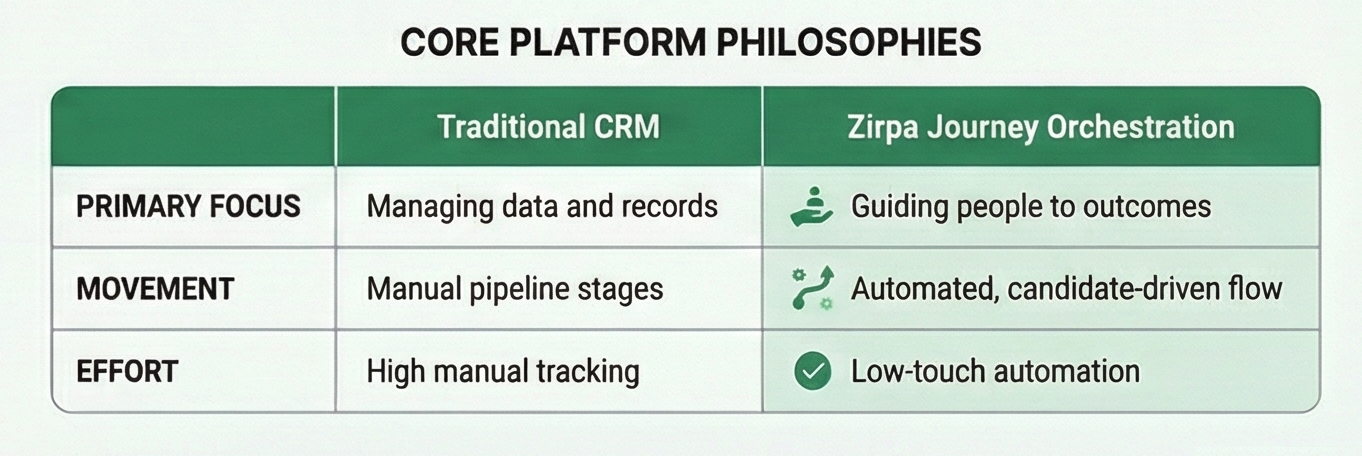
Traditional CRMs focus on pipelines and manual updates:
- Team members move records through stages
- Progress depends on manual actions
- The system stores information but does not drive movement
Zirpa works differently:
- Candidates move through a defined flow
- Progress is triggered by actions, not manual updates
- The system actively guides the process
Journey vs Pipeline #
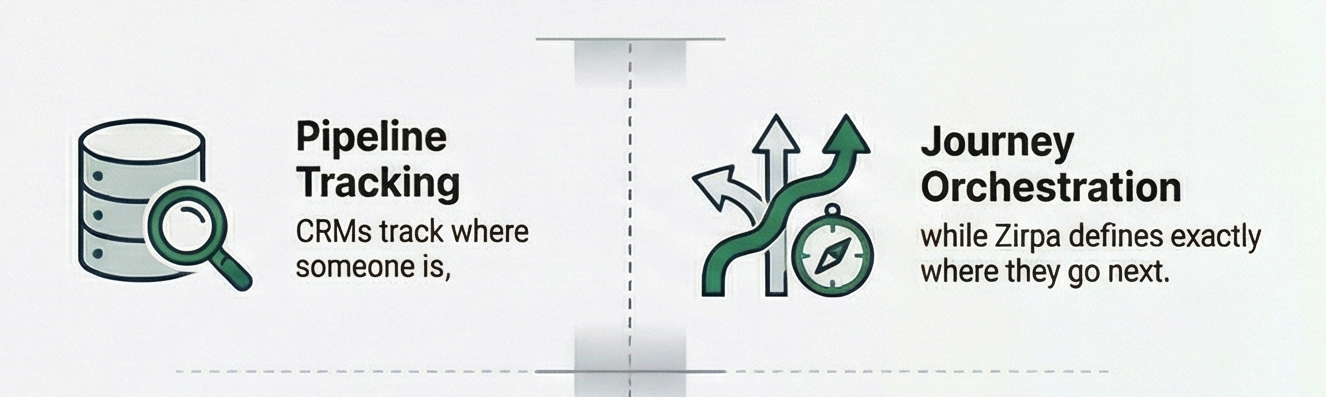
CRMZirpaYou track where someone isYou define where they go nextPipeline trackingJourney orchestrationStatic recordsActive progression
Each Step in Zirpa is part of a designed flow that moves the Candidate forward automatically.
Candidate-Driven Flow #
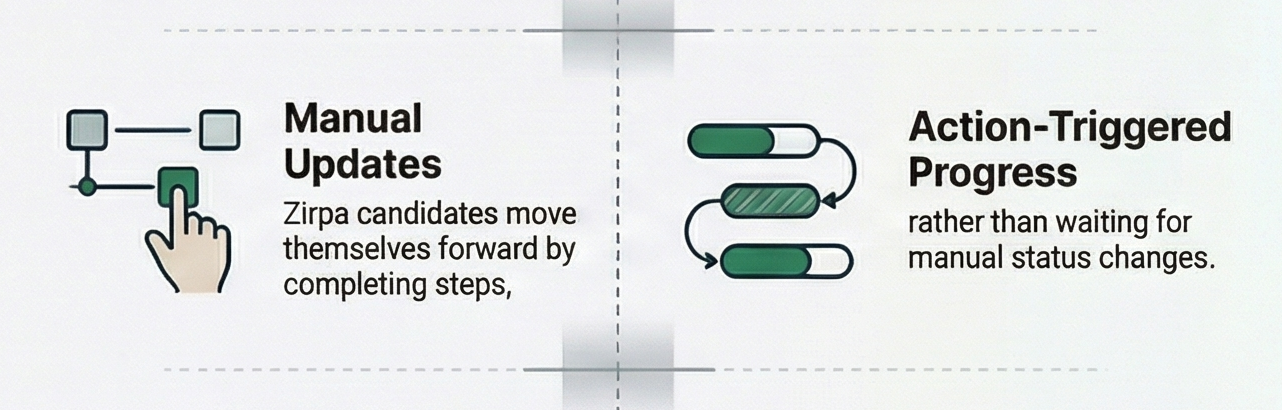
 In most CRMs, progress depends on a team member updating the system.
In Zirpa, progress happens through the Candidate:
- Completing Steps
- Submitting forms
- Responding to prompts
This reduces manual work and keeps the process consistent.
Guided Experience #
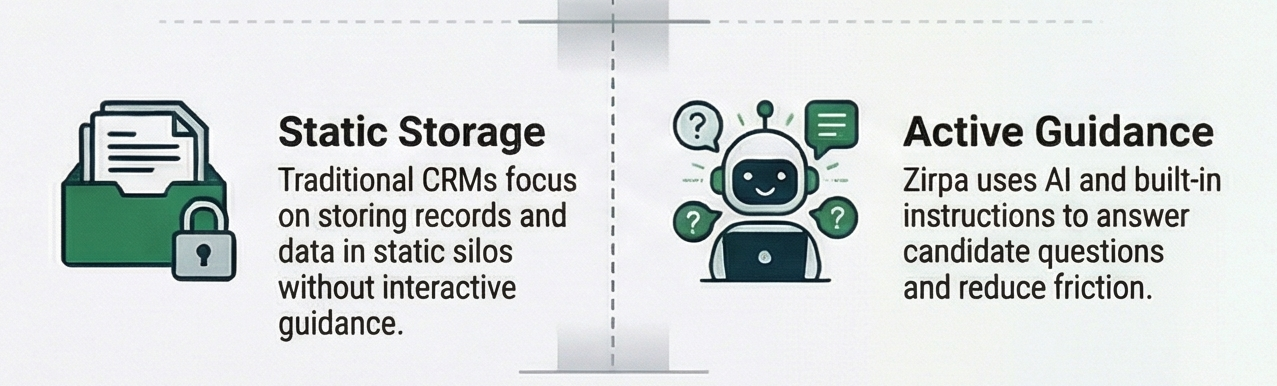
Zirpa does more than store data. It actively guides the Candidate by:
- Showing the next Step
- Providing instructions
- Using AI to answer questions and reduce friction
Instead of the Candidate asking "what should I do next?", the Agent provides the answer.
Automation and Control #
 Zirpa includes built-in control mechanisms:
- Gates to receive data and start Journeys (see What is a Gate?)
- Navigation Rules to control movement between Steps
- Reminders to follow up automatically
This allows the Journey to run with minimal manual intervention.
Outcome-Driven #
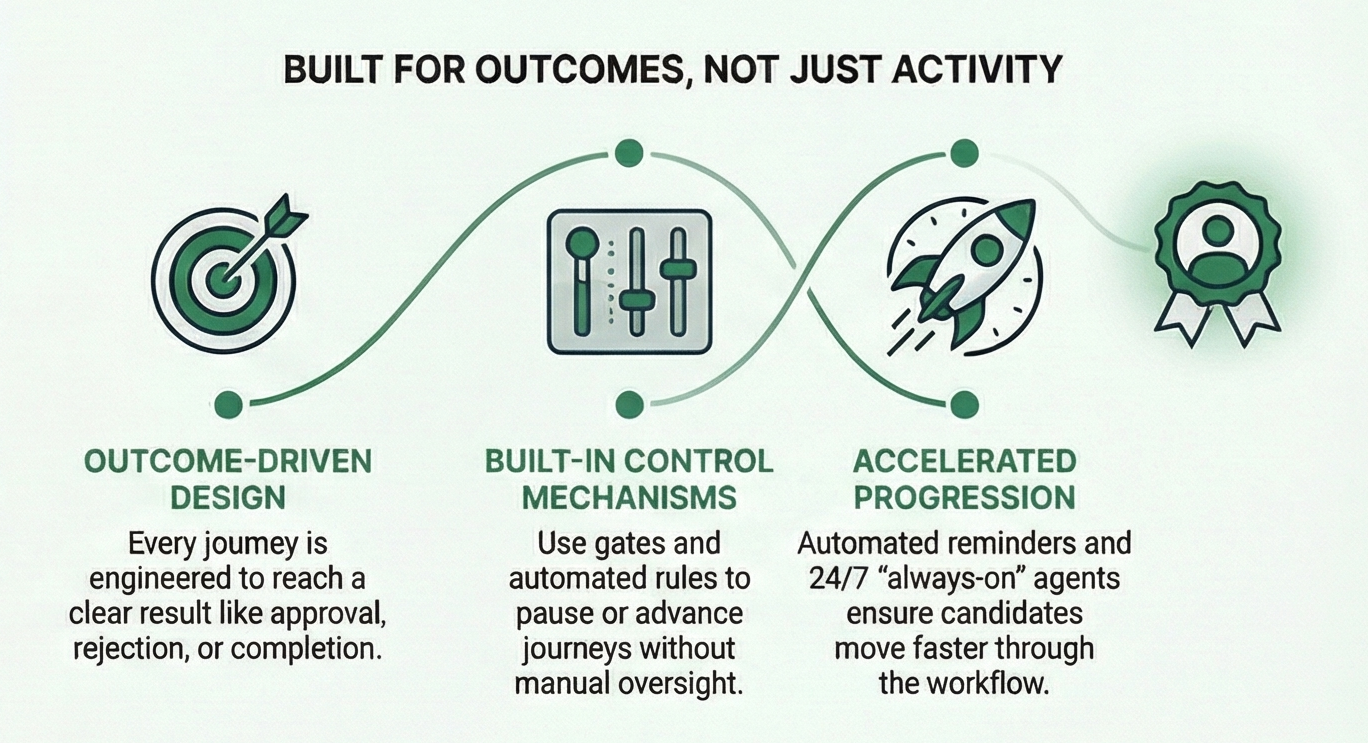 CRMs often focus on tracking activity. Zirpa focuses on reaching Outcomes.
Every Journey is designed to move the Candidate toward a clear result, such as:
- Completed
- Approved
- Declined
For more on how Outcomes work, see Core Concepts: Outcome.
Why This Matters #
- Less manual tracking
- More consistent workflows
- Faster Candidate progression
- Clear visibility from start to Outcome